

Find the cause
Separate tank, pipe, pump and field issues.
Concord Septic Services is the #1 septic in Concord, NC. We handle septic pumping, septic cleaning, septic inspections, tank repairs, septic installation or replacement, and drain field services, servicing the greater Concord area.
We have over 18 years of experience handling installation, oversight, and business development. It's important to start with the cause, then choose the right service. North Carolina's standard tank minimum is 1,000 gallons for four bedrooms or fewer. Cabarrus soils, sewer access and your permit record guide the right plan. Expected service life depends on the installed product, site conditions and maintenance.
Separate tank, pipe, pump and field issues.
Know what your estimate includes.
Plan around the actual installed system.
Compare starting prices with the full proposal.
Confirm soils, sewer access and permits early.
Keep records and a practical care schedule.
Start with the service that matches your need. If you are unsure, describe the symptoms.
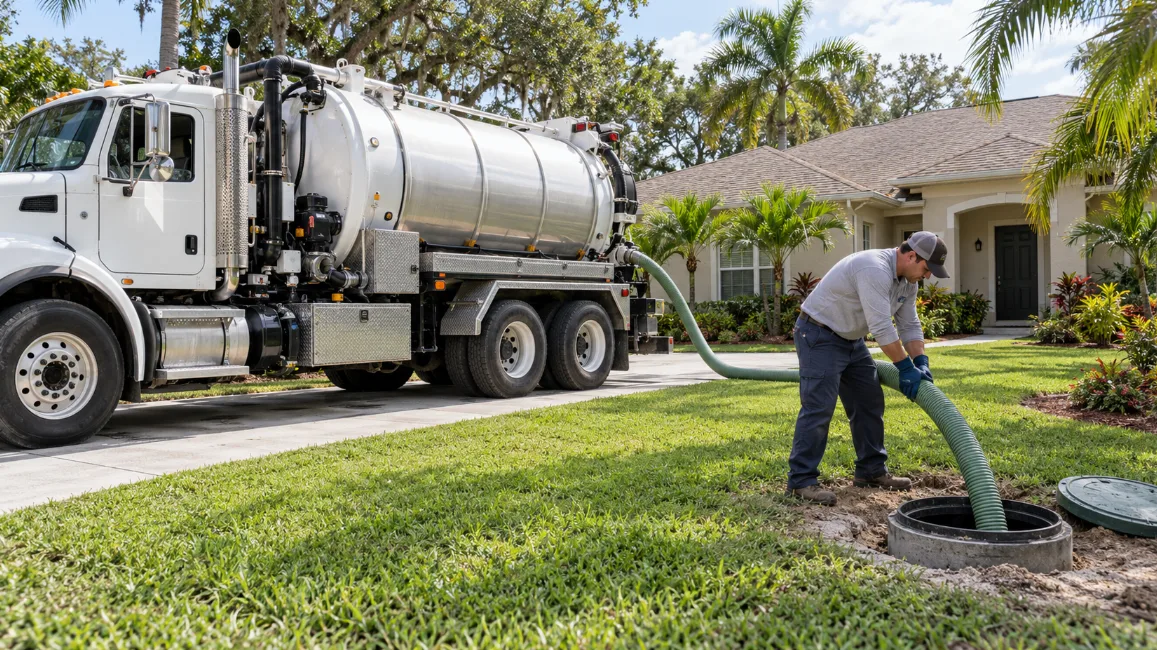
Routine care, a recurring backup or a new system: each starts with a clear scope and the property’s actual needs.
Remove built-up waste. Confirm tank capacity, lid access and the last service date.
Explore Septic ServiceRemove residue after pumping. Ask whether wash-down and deeper cleaning are included.
Explore Septic ServiceCheck accessible components, records and symptoms before buying, maintaining or repairing a system.
Explore Septic ServiceAssess lids, baffles, filters, connections and pumps before deciding whether replacement is needed.
Explore Septic ServicePlan tank capacity, treatment, soil and the field together. Check sewer availability first.
Explore Septic ServiceDescribe the backup and request urgent service. Availability is confirmed separately.
Explore Septic Service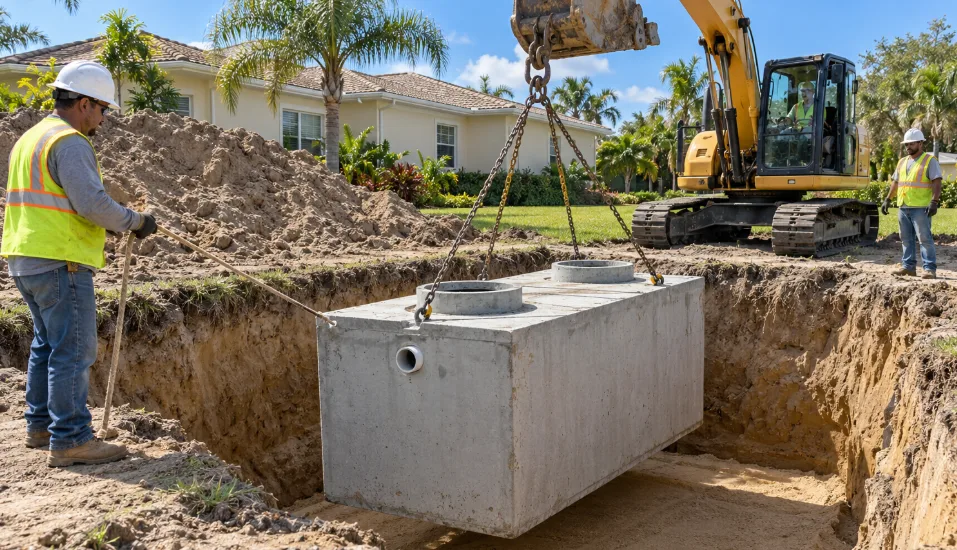
A tank can be sound while the field struggles. Review distribution, soil and groundwater before deciding on repair or replacement.
Separate damaged distribution parts from soil and groundwater problems before choosing repairs.
Explore Drain Field ServiceInvestigate wet spots, odors and recurring backups using records, distribution checks and site conditions.
Explore Drain Field ServicePlan a suitable treatment area when repair is not enough. Review the tank and sewer options too.
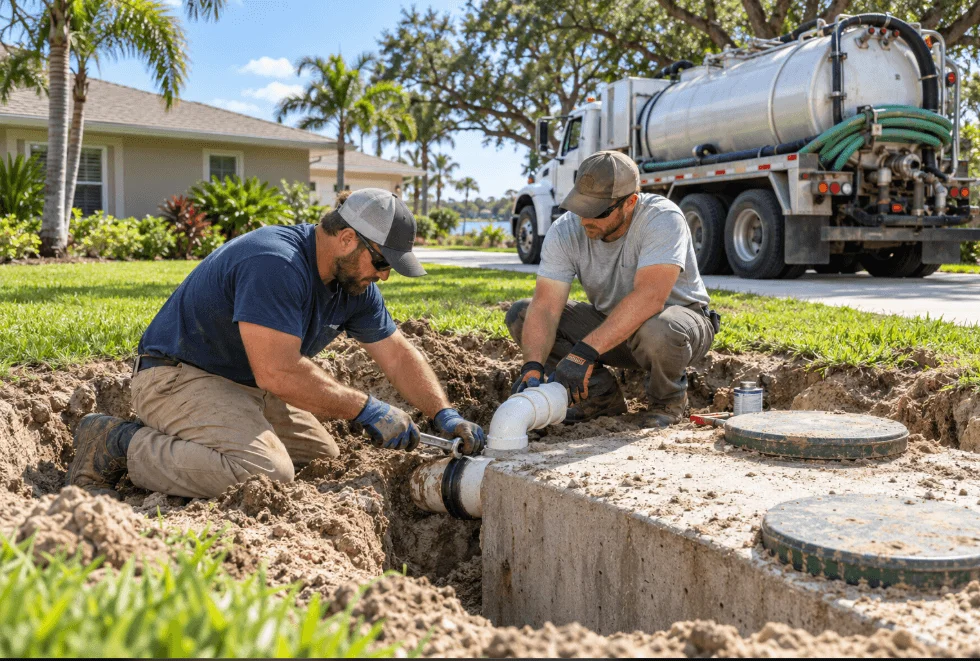
Explore Drain Field ServiceStart with the floor plan, system record, sewer availability and site conditions before choosing a tank or replacement field.
Cabarrus County listings had a 2,051-sq-ft median in April 2026. This is a county listing benchmark, not an average of Concord homes or septic properties. Bedrooms and approved use guide sizing.
Check sewer availability. Apply through Accela with your site plan, bedroom count and required documents. Cabarrus Health Alliance evaluates the site. Obtain the required construction approval before installation or repair, then the final operation approval.
What looks like a tank failure can start in the drain field, the plumbing or the way the property uses water.
Delayed pumping or damaged baffles let waste escape.
Leaks and heavy loads can overwhelm treatment.
The wrong materials clog and disrupt the system.
Rain, groundwater and runoff restrict drainage.
Roots, traffic or broken lines interrupt flow.
Added use, failed pumps and aging parts change performance.
Compare septic types, tank sizes and the permit steps in a few clear sections.
About 2,050 sq ft is a useful local listing benchmark. Cabarrus County’s median listed-home size was 2,051 sq ft in April 2026. It is not a citywide average or a measurement of septic-served homes.
A three-bedroom, two-bath home is an example, not a measured local average. Bedrooms and approved use drive septic design; floor area alone does not size a tank.
| Bedrooms | Minimum tank | Design context |
|---|---|---|
| 1–4 | 1,000 gallons | Confirm approved use and equipment |
| 5 | 1,250 gallons | Standard single-dwelling rule |
| 6 or more | Flow-based calculation | Designer applies the applicable rule |
Residential design flow generally starts at 120 gallons per day per bedroom; higher occupancy can increase it. Flow is a daily design allowance, not tank storage. Grinder or sewage lift pumps ahead of the tank and approved treatment designs have special requirements. Confirm the installed tank from records.
Heavy; check shell, joints and access.
Lighter; proper support and fittings matter.
Lightweight; follow approved backfill and uplift requirements.
Tank, field and pump life differ. Product quality, installation, soil conditions and maintenance affect how long each lasts. An age alone does not decide replacement.
These are North Carolina options, not measured Concord market shares. The approved design decides which can be used.
| Type | How it works | What to know |
|---|---|---|
| Conventional gravity | Tank settles solids; liquid moves to soil trenches. | Needs suitable soil depth and layout. |
| Chamber field | Approved chambers replace gravel in the dispersal area. | A field component, not added biological treatment. |
| Pump-dosed | A pump delivers effluent to the field. | A pump does not automatically mean aerobic treatment. |
| Low-pressure pipe | Small pipes spread doses across the field. | Pump, controls and site suitability matter. |
| Advanced treatment | Aerobic or other approved units treat effluent further. | Requires power and prescribed professional care. |
| Drip or fill design | Controlled emitters or engineered fill suit some limited sites. | Special design, approval and maintenance apply. |
Choose around the soil and long-term care cost. A larger tank or added aerator cannot make every lot suitable.
Soil layers, depth to rock, seasonal wetness, slope and available repair space matter. Do not assume every Concord lot has the same clay or drainage. Heavy rain and runoff can slow soil absorption; keep roof drainage away from the field.
Fee examples: the posted soil-evaluation application is $325 for the first acre; a repair application is $50 plus a $100 repair permit. Other fees may apply. Confirm the current total before paying.
Timing: use 4–6 business days only as an initial planning allowance, not an official approval deadline. Missing documents, soil review, design and agency scheduling can extend it.
Practical answers for Concord homes and businesses.
Conventional gravity, chamber, pump-dosed and low-pressure pipe systems are options. Some sites need approved advanced treatment, drip or fill designs. Soil findings and approval decide.
For a standard single dwelling, four bedrooms or fewer require at least 1,000 gallons; five require 1,250. Larger homes, special equipment and approved treatment systems have separate rules.
Cabarrus County listings had a 2,051-sq-ft median in April 2026. It is a county listing measure, not the average size of Concord septic homes.
No. Pumping removes tank waste; soil and distribution problems need separate assessment.
Cabarrus Health Alliance handles onsite wastewater applications through Accela. Start with the parcel record, site plan and sewer check.
Allow 4–6 business days for initial planning only. This is not an agency deadline; documents, soils, design and scheduling can extend the process.
Tell us where you are, what is happening and the service you need.